.png)
The Investor Psychology Behind Food Factory Demand

Updated: Jun 7
A food factory is not the kind of asset that usually appears in lifestyle magazines. It does not have the emotional pull of a home or the glamour of a prime retail storefront. But investors are often attracted to things the wider public does not immediately understand.
Food production space is one of those categories. It sits behind the scenes, supporting restaurants, cafes, caterers, bakeries, cloud kitchens, food manufacturers, FMCG brands and delivery-driven operators. Customers may never see it, but the business depends on it.

Why Demand Can Be Sticky
A tenant who sets up a food production facility is not like a tenant who moves into a simple storage unit. Food production usually involves renovation, equipment, approvals, workflow planning, suppliers and operational routines. Once the unit is functioning well, moving is disruptive.
From an investor's point of view, a sticky tenant profile can be attractive because the space becomes more than a temporary address. It becomes part of the tenant's operating system.
Why Purpose-Built Matters
Food production is not easy to accommodate in every industrial building. Businesses may need proper access, power, drainage, waste handling, loading arrangements, floor loading and suitable zoning. A purpose-built food facility can reduce the mismatch between what operators need and what generic industrial stock provides.
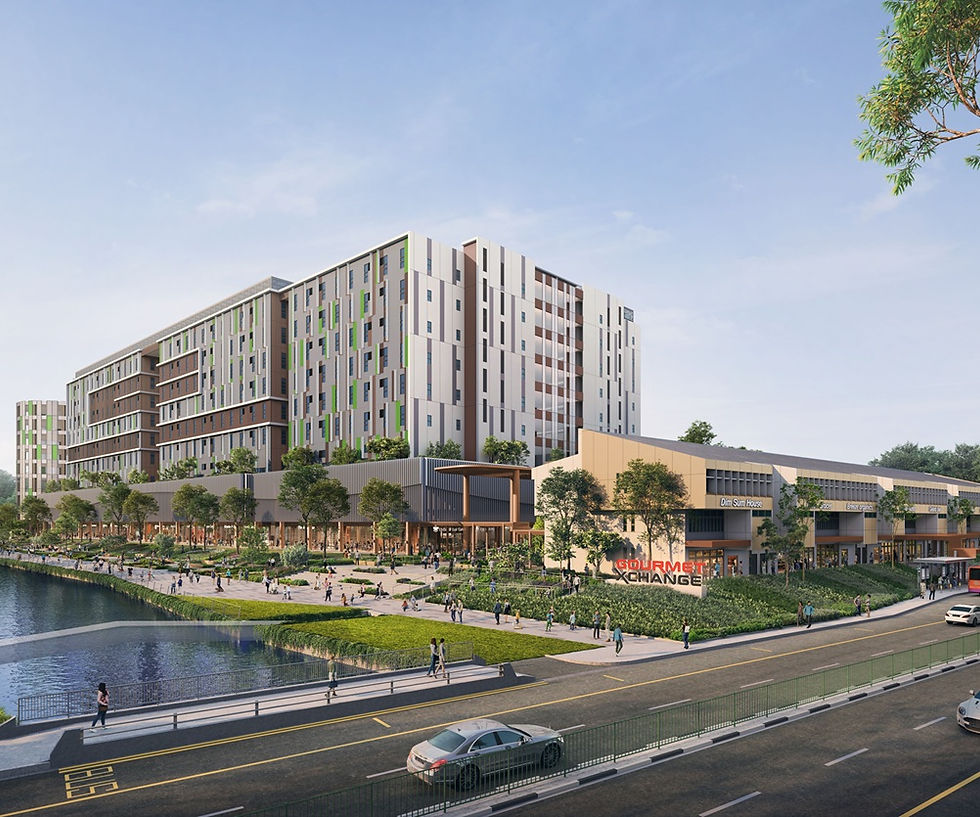
This is where Gourmet Xchange has a clear narrative - it is positioned specifically around food production and food-related uses from the ground up.

The Scarcity Factor
Industrial property is already a specialised investment category. Food-focused strata space in a central location is even more niche. Scarcity does not automatically guarantee performance, but it does make replacement more difficult.
If operators want a similar combination of centrality, food focus, ramp-up functionality and developer quality, there are very few alternatives available in Singapore. JTC maintains only eight Approved Food Factory Locations, and B2-zoned space in the Central Region rarely enters the market.
Institutional and Retail Investor Attention
As ABSD rates have made residential property more expensive for multiple-property buyers and foreign investors, industrial and commercial property has drawn growing interest as an alternative. Food factories offer something specific: a defensive sector, a building type that tenants are reluctant to leave, and a national policy context that actively supports local food production.
None of this is a guarantee of returns, and every buyer's circumstances differ. For a deeper look at the investment fundamentals, this article on why smart investors are taking notice of Singapore's food factory sector covers the key drivers in detail. This is general information, not financial or investment advice.
What Gourmet Xchange Offers
For investors, Gourmet Xchange combines a central location, food-specific zoning, a Blue-Chip developer in CapitaLand Development, and a development scale of 264 production units that creates a genuine ecosystem of food businesses within one building. Visit gourmetxchange.co to learn more or contact Marc Singh at 91170234.


Comments