.png)
Singapore’s Food Production Reset: What the End of ‘30 by 30’ Means for Food Factories and Investors

Updated: Jun 7
In late 2025, Singapore made headlines by dropping its landmark 30 by 30 food goal. Read too quickly, that sounds like a retreat from local food production. Read properly, it is the opposite: a sharper, more commercially grounded commitment to producing food at home, and a clear signal about the infrastructure the next decade of Singapore food production will be built on. For food operators and property investors, the detail beneath the headline matters far more than the headline itself.
What Actually Changed: From '30 by 30' to Targeted 2035 Food Production Goals
Singapore introduced the 30 by 30 food target in 2019, aiming to produce 30% of the nation's nutritional needs locally by 2030 - using less than 1% of its land. It was always an ambitious goal for a city-state that imports more than 90% of its food.
On 4 November 2025, Minister for Sustainability and the Environment Grace Fu announced a recalibration. Singapore would drop the single 30%-by-2030 target and replace it with category-specific goals: by 2035, local farms should supply 20% of the nation's fibre (vegetables, bean sprouts and mushrooms) and 30% of its protein (eggs and seafood).
The reasons were pragmatic. Limited land, high labour and energy costs, and a string of farm closures had made the original goal difficult to reach. In 2024, local production covered only around 8% of fibre and 26% of protein consumed domestically. The new targets are narrower - but they arrive with something the original goal lacked: a concrete plan to make local production commercially viable.
Food Resilience Is More Than Just Farming
The strategic intent has not changed. Singapore remains structurally exposed to supply shocks - from regional export bans to climate-driven shortages - precisely because it imports the overwhelming majority of its food. As the Singapore Food Agency (SFA) has long argued, a resilient, sustainable food system is national infrastructure, not a niche industry.
But food resilience is not only about growing vegetables. It runs across the entire value chain: processing, manufacturing, central kitchens, cold-chain storage and distribution. Locally grown produce still needs to be washed, packed and processed; a local egg and seafood supply feeds local food manufacturing. Strengthening Singapore's food production means strengthening the facilities where food is made - not just the farms where it is grown.
For food manufacturers, cloud kitchen operators, and central kitchen businesses scaling their operations, this policy direction has direct implications for where they choose to base themselves. That is where the shift becomes directly relevant to property.
Shared, Plug-and-Play Food Facilities: The Government's Blueprint
The most overlooked part of the November 2025 announcement was how the government intends to lower costs for producers. Alongside the new targets, the authorities said they are studying the feasibility of a multi-tenanted food production facility - offering plug-and-play space, common utilities and shared services - so operators no longer each have to build expensive infrastructure from scratch.
The logic, as the SFA framed it, is simple: when production costs fall, local producers can lower prices and sell more. In other words, Singapore's national food policy validates a model the private market is already delivering.
This is not the first time Singapore's government has used property infrastructure as a lever to grow a strategic sector. For a broader perspective on how policy has shaped Singapore's industrial property landscape, this analysis of the three key trends driving industrial investment in Singapore is worth reading.
Gourmet Xchange: Singapore’s Largest Purpose-Built Strata Food Factory at Kallang Way

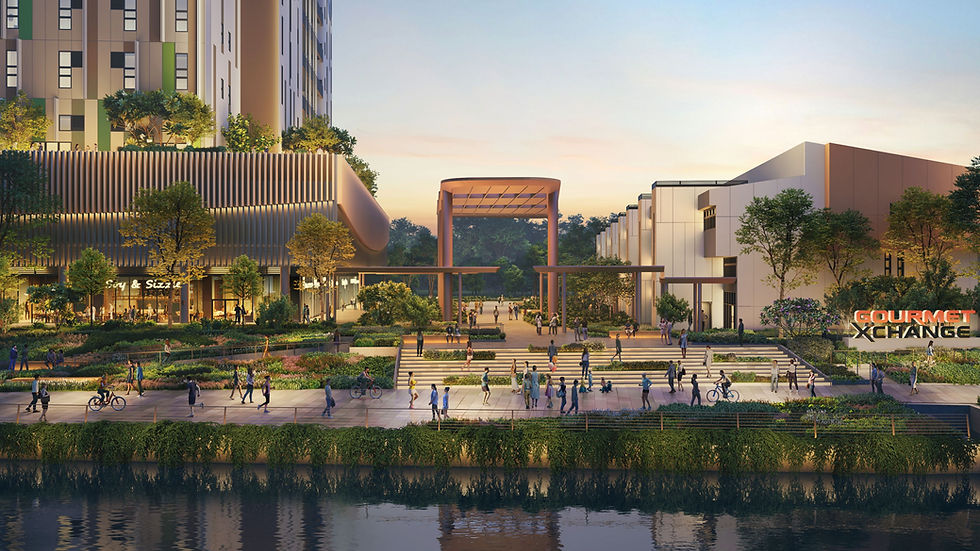
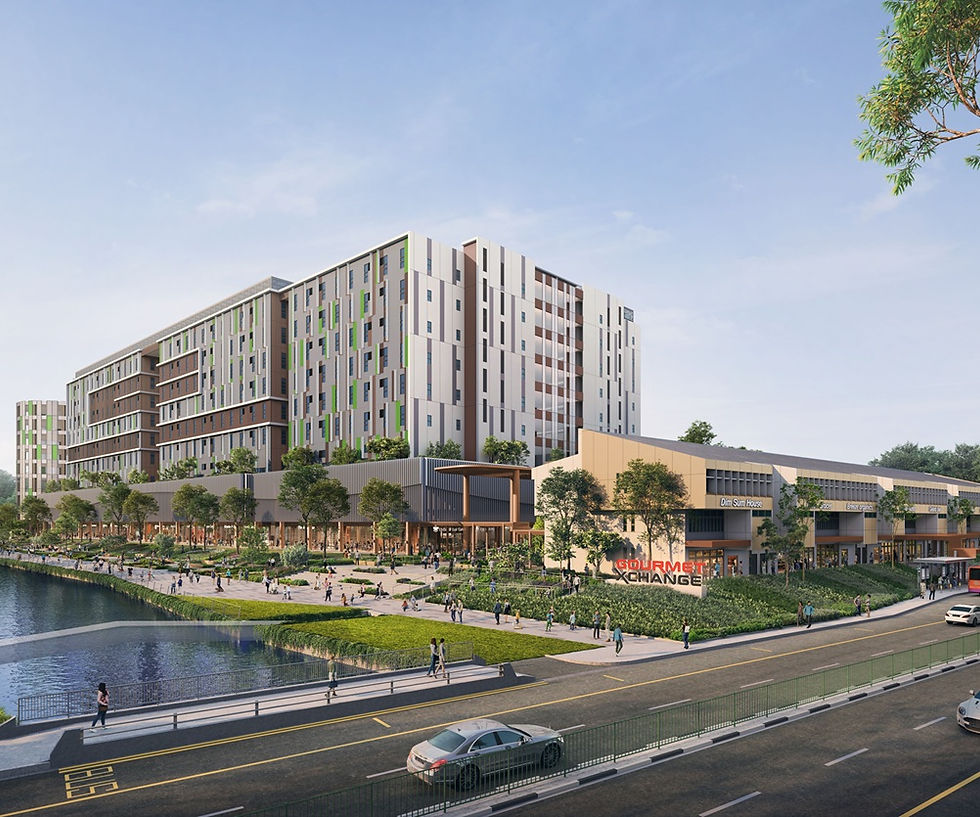
Gourmet Xchange delivers exactly this model - today. Located at Kallang Way in Singapore's city-fringe Central Region, Gourmet Xchange is Singapore's largest purpose-built strata-titled food factory: 264 modern production units across The Xchange, a nine-storey production block. CapitaLand Development is consistently renowned for quality infrastructure, and this development is no exception.
For operators, the appeal is operational rather than theoretical:
Purpose-built, food-zoned space. Units sit in a Prime Food Zone (B2) and are designed for food production from the outset - no retrofitting of generic industrial space.
Integrated shared amenities. Common facilities spread costs across tenants: the same cost-spreading logic Singapore's government is now studying for the sector, available today.
Heavy-vehicle logistics built in. Ramp-up access for 40-footer container trucks to Levels 1 to 3, a 16-metre-wide driveway, dedicated loading and unloading, and common container bays.
A genuinely central location. A short walk from Mattar MRT, well connected to the PIE, CTE and KPE - shortening delivery routes and widening the labour pool.
Room to grow. Unit sizes run from approximately 3,175 sqft B2 production units to 8,000+ sqft deluxe floors, giving food businesses a path from start-up to scale-up under one roof.
For food manufacturers, central and cloud kitchens, bakeries and FMCG brands, Gourmet Xchange does what the government wants shared facilities to do for the sector: it lowers the barrier to running a modern, cost-efficient food operation in Singapore.
The development also features eight heritage terrace units - retained industrial buildings at the front of the site, preserved as part of JTC's mandate to honour Singapore's industrial legacy. The story behind these buildings, and CapitaLand's approach to preserving industrial heritage at Gourmet Xchange, is explored in detail in this article on reimagining food production at the heart of Singapore.
The Investment Case for Strata Food Factories in Singapore
For investors, Gourmet Xchange sits at an unusual intersection: a specialised, sector-resilient asset in a scarce central location, supported by long-term policy tailwinds. Several fundamentals stand out:
Sector resilience. Food is a defensive, demand-stable sector, and national policy is actively working to keep more of the value chain onshore.
Scarcity. Food-zoned industrial space in the Central Region is rare; central strata-titled food factories are rarer still.
Industrial asset advantages. Industrial property in Singapore is not subject to Additional Buyer's Stamp Duty (ABSD), which broadens the buyer pool and supports liquidity relative to residential assets.
Tenant depth. A wide spectrum of potential occupiers - from manufacturers to cloud kitchens - supports a diversified tenant profile and rental resilience.
Timing. With a 33-year leasehold from 2025 and estimated completion in H1 2028, the development is entering the market just as the policy emphasis on cost-efficient local food production sharpens.

For a comprehensive look at the investment fundamentals behind Singapore's food factory sector, this article on why smart investors are taking notice of Singapore's booming food factory market covers the key drivers in depth.
Foreign investors considering industrial assets in Singapore should also note that the ABSD landscape differs significantly from residential property. This guide to buying property in Singapore as a foreigner outlines the relevant rules, stamp duties and processes.
None of this is a guarantee of returns, and every buyer's circumstances differ. This is general information, not financial or investment advice.
The Bottom Line: Singapore Is Doubling Down on Food Production Infrastructure
Singapore did not abandon local food production in November 2025 - it became more realistic about how to achieve it. The headline goal changed; the commitment to food resilience, and the recognition that it depends on cost-efficient production infrastructure, only deepened.
For food businesses weighing where to base their operations, and for investors seeking exposure to a sector the government is actively supporting, that shift is worth paying attention to. Gourmet Xchange is one of the clearest expressions of where this is heading. Visit gourmetxchange.co to learn more about the development.
Sources: Reuters, Channel NewsAsia, and the Singapore Food Agency. Property details from Gourmet Xchange project materials; figures are indicative and subject to change. This article is general information and does not constitute financial, investment or contractual advice.
This article was originally published on marcsingh.com — Marc Singh’s commercial real estate blog covering Singapore’s industrial and food factory property market. Read more articles on the original website: marcsingh.com/blog.


Comments