.png)
Test Kitchens and Food R&D: The Overlooked Demand Driver for Food Factory Space

Updated: Jun 21
If you are searching for a food factory in Singapore, a central kitchen in Singapore, or a Kallang food factory that can support growth, "Test Kitchens and Food R&D: The Overlooked Demand Driver for Food Factory Space" is a topic worth paying attention to. Gourmet Xchange at 1 Kallang Way sits at the intersection of food production, industrial real estate, logistics and F&B expansion.
The bigger point is simple: food R&D, test kitchens and pilot production. In Singapore, where labour, rental, land and logistics costs are all tightly felt, the property decision is often an operating decision in disguise. A well-chosen food production base can influence output, consistency, staffing, delivery routes, compliance planning and long-term business resilience.

Not every user starts at full scale
Some food businesses need a place to test, refine and validate products before scaling. Test kitchens and food R&D spaces can support recipe development, shelf-life testing, packaging trials, beverage formulation, frozen product development and pilot batches.
The key is to separate short-term hype from long-term demand. Some concepts will come and go, but the need for safe, efficient, scalable food production is structural. That is why this space deserves more attention from both operators and investors.
R&D still needs infrastructure
A food R&D team may not produce at full commercial volume, but it still needs hygiene, drainage, ventilation, storage, equipment access and sometimes cold chain. It may also need to move from trial production to pilot production without relocating.
This trend is easy to underestimate because it happens behind the scenes. Consumers see the final product, but the operational shift happens in preparation, packaging, cold chain, fulfilment and quality control. That is where specialised food factory space becomes relevant.
Why Gourmet Xchange may appeal
The Gourmet Xchange brochure lists food innovation and R&D as part of the potential suitability mix, including test kitchens for food product development and food tech or agri-tech startups. That broadens the project's appeal beyond traditional central kitchens and manufacturers.
The key is to separate short-term hype from long-term demand. Some concepts will come and go, but the need for safe, efficient, scalable food production is structural. That is why this space deserves more attention from both operators and investors.
From pilot batch to commercial scale
One challenge for food startups is moving from a small successful recipe to commercial production. Equipment, workflow, packaging, cold chain and shelf-life become more complex. A proper food factory environment encourages teams to think about scale earlier.

This trend is easy to underestimate because it happens behind the scenes. Consumers see the final product, but the operational shift happens in preparation, packaging, cold chain, fulfilment and quality control. That is where specialised food factory space becomes relevant.
Investor takeaway
Food innovation tenants may include startups, R&D teams, corporate innovation units or specialty food brands. Their financial strength must be assessed carefully, but they can expand the occupier universe for purpose-built food production space.
The key is to separate short-term hype from long-term demand. Some concepts will come and go, but the need for safe, efficient, scalable food production is structural. That is why this space deserves more attention from both operators and investors.
Trend takeaway: how to apply this before choosing a food factory
Identify whether the trend affects your actual production volume, menu structure or delivery model.
Avoid buying or leasing based on hype alone. Translate the trend into space, equipment, manpower and compliance requirements.
Check whether a central kitchen, food factory or hybrid production base can reduce repeated costs across outlets.
Review how the unit can adapt if consumer demand shifts.
Use property as a platform for operating flexibility, not just as storage for equipment.
Why this matters for Gourmet Xchange Kallang
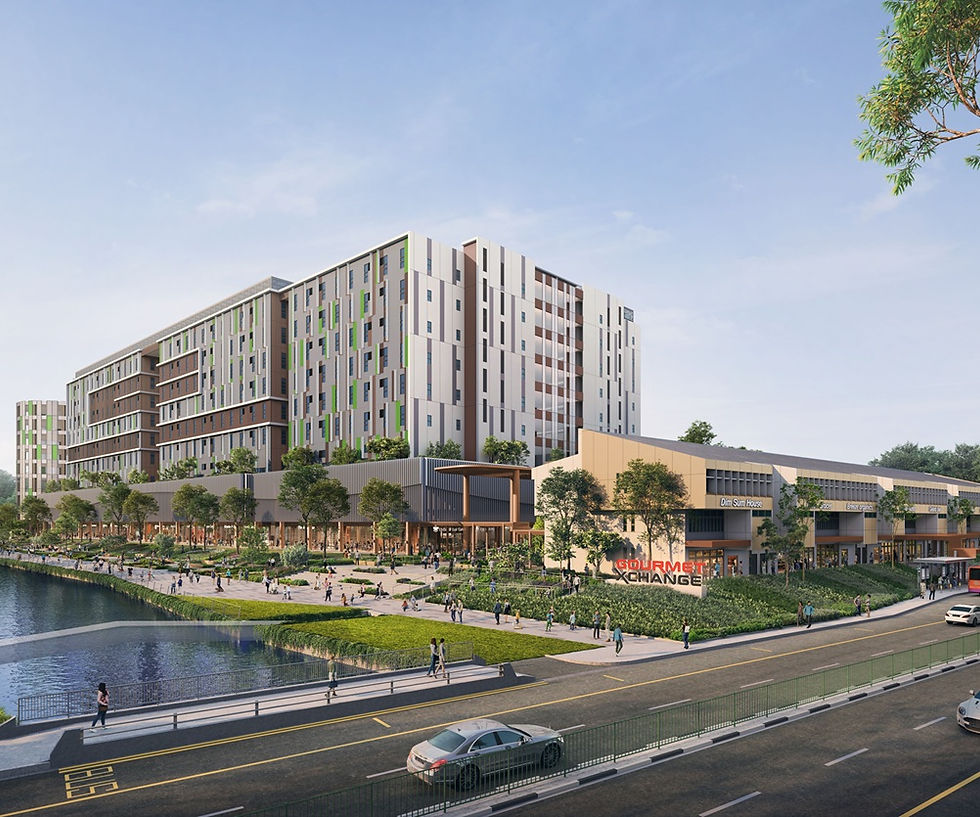
Gourmet Xchange is positioned as a strata-titled food hub at 1 Kallang Way, with The Xchange, Heritage Terrace, F&B spaces, food kiosks, an industrial canteen, central plaza and waterfront elements forming part of the project story. The key appeal is not one feature alone. It is the combination of central Singapore location, food-only positioning, production-oriented specifications, ramp-up logistics and the ability for suitable operators to build a more permanent food production base.
As always, buyers and tenants should rely on the latest official developer materials, approved plans, sale documents and authority requirements before making any commitment. Blog articles are useful for framing the decision, but final due diligence must be based on the definitive documents and professional advice.

Related reading
Source credit
Project facts based on Gourmet Xchange developer materials and official brochure. Public context includes Reuters reporting on Singapore's food resilience strategy in November 2025. Reuters article reference: https://www.reuters.com/world/asia-pacific/singapore-drops-2030-food-self-sufficiency-goal-minister-says-2025-11-04/
Speak to the appointed agent
If you are assessing whether Gourmet Xchange fits your operational or investment requirements, speak to Marc Singh for the latest available units, floor plans, specifications and viewing arrangements.


Comments