.png)
Why Food Businesses Are Quietly Moving Their Kitchens Closer to the City

For a long time, food production was treated as something that belonged far away from the customer. The logic was simple. Production space needed to be practical, not visible. It needed to be cheaper, larger and functional. If the kitchen was hidden in an industrial estate, that was fine. Customers did not need to see it.
But the food business has changed
Today, brands move through delivery platforms, cloud kitchens, social media, catering, retail partnerships, events, central production, franchise models and multiple outlets. Speed matters. Consistency matters. Access to manpower matters. Access to customers matters. That is why the location of a central kitchen is becoming more strategic. A food factory is no longer just a place where food is produced. It is the engine room of the brand.
The hidden cost of being too far away
A cheaper production space in a distant location may reduce rent, but it can increase other costs. Delivery routes may take longer. Staff recruitment may be harder. Outlet replenishment may be less efficient. Management oversight may become more difficult. Last-minute orders may be harder to fulfil. For a growing F&B brand, these small inefficiencies can compound. A central location can help a business respond faster, manage quality more closely and support multiple sales channels more effectively.
Why Kallang is interesting
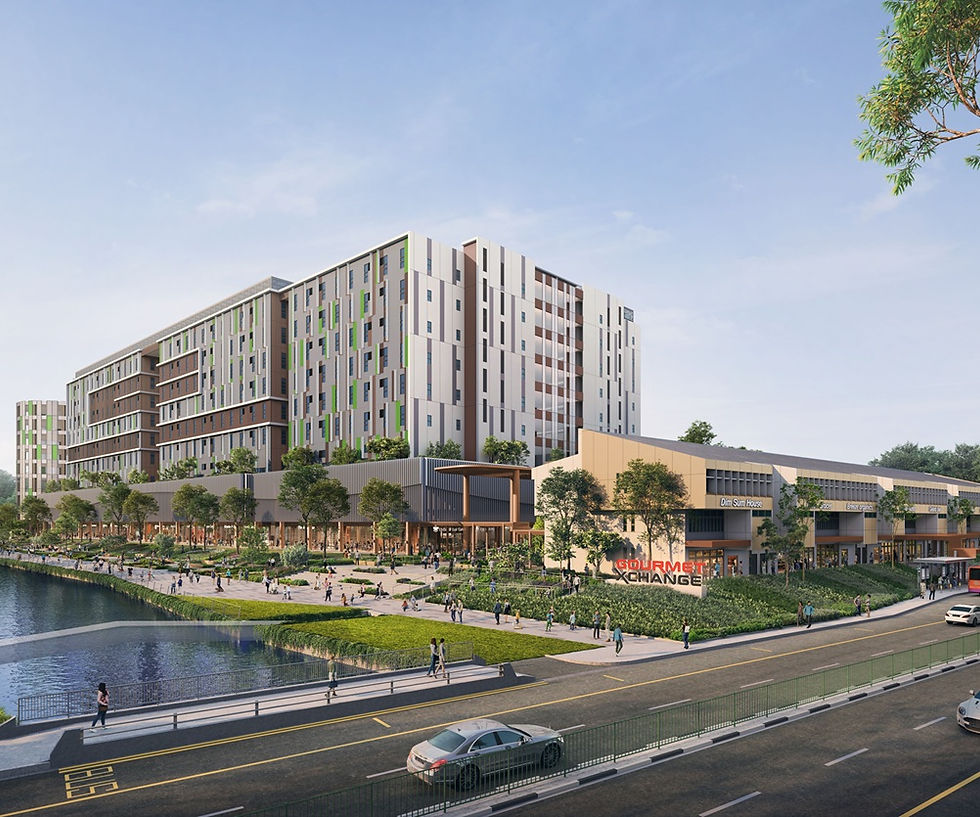
Kallang sits in a useful middle ground. It is not the CBD, but it is close enough to serve central Singapore, city-fringe neighbourhoods and key F&B clusters. It also sits within a wider area that has been evolving from older industrial stock into more modern, mixed and productive uses.
As a purpose-built food facility at 1 Kallang Way, Gourmet Xchange is designed around the needs of modern food businesses, not retrofitted as an afterthought. The combination of production space, ramp-up access, lifestyle-facing components and a waterfront setting gives it a different identity from a typical food factory.
The bigger shift
The old model separated production from brand experience. The new model is starting to connect them. A food business may want central production, customer-facing concepts, events, brand storytelling, retail distribution and delivery efficiency to work together.
Location does not only matter for restaurants. It matters for production too. The kitchen that supports the business from behind the scenes may be one of the most important real estate decisions the brand makes. In F&B, the front of house gets the attention. But the back of house often determines whether the business can scale.
To understand unit types, pricing, availability and whether Gourmet Xchange suits your F&B business or investment objectives, contact Marc Singh for a detailed walkthrough.
────────────────────────────────────────────
This article was originally published on marcsingh.com — Marc Singh's commercial real estate blog covering Singapore's industrial and food factory property market.


Comments