.png)
Why a Food Factory Can Be a Brand Asset, Not Just a Back-of-House Facility

If you are searching for a food factory in Singapore, a central kitchen in Singapore, or a Kallang food factory that can support growth, "Why a Food Factory Can Be a Brand Asset, Not Just a Back-of-House Facility" is a topic worth paying attention to. Gourmet Xchange at 1 Kallang Way sits at the intersection of food production, industrial real estate, logistics and F&B expansion.
The bigger point is simple: how production facilities can strengthen brand trust and identity. In Singapore, where labour, rental, land and logistics costs are all tightly felt, the property decision is often an operating decision in disguise. A well-chosen food production base can influence output, consistency, staffing, delivery routes, compliance planning and long-term business resilience.

Production is part of the promise
Most people think of food factories as hidden spaces. They imagine stainless steel tables, freezers, packing lines and vans. All of that may be true, but it misses a larger point. For the right F&B business, the production base is where the brand proves its seriousness.
For food businesses, the best real estate is not always the most visible space. Sometimes it is the space that protects the recipe, improves the workflow and gives the team confidence to grow without losing control of the product.
Customers care how food is made
Modern consumers are more curious about hygiene, provenance, freshness and craft. A bakery that centralises production can speak about consistency. A sauce maker can speak about batch control. A caterer can speak about reliability. A restaurant group can speak about how its central kitchen protects flavour across outlets.
This matters because consumers increasingly judge food brands by consistency, experience and trust. A production base that supports those qualities can quietly strengthen the brand, even if most customers never see the facility. The back-of-house is no longer just back-of-house. It is part of the brand system.
Training and culture start at the base
A central production base can also act as a training ground. New staff can learn recipes and processes from the same source. Quality standards can be taught consistently. Product development can happen in a proper test environment rather than being squeezed into a busy outlet kitchen.
For food businesses, the best real estate is not always the most visible space. Sometimes it is the space that protects the recipe, improves the workflow and gives the team confidence to grow without losing control of the product.
Why Gourmet Xchange is interesting
Gourmet Xchange combines production space with a wider environment that includes a river promenade, central plaza, sky garden, F&B spaces and Heritage Terrace. For brands that want production, customer engagement and storytelling closer together, that is a distinctive proposition, subject to change-of-use and relevant approvals.

This matters because consumers increasingly judge food brands by consistency, experience and trust. A production base that supports those qualities can quietly strengthen the brand, even if most customers never see the facility. The back-of-house is no longer just back-of-house. It is part of the brand system.
Investor takeaway
A tenant that sees the production base as part of its brand may have deeper attachment to the space. That does not guarantee rent, but it changes the tenant story.
For food businesses, the best real estate is not always the most visible space. Sometimes it is the space that protects the recipe, improves the workflow and gives the team confidence to grow without losing control of the product.
Brand takeaway: how to apply this before choosing a food factory
Decide whether the facility is only for production or also part of the brand story.
Consider whether frontage, customer access, staff amenities and surrounding environment support the intended brand positioning.
Keep production practicality as the first priority. A good-looking unit that disrupts workflow is not a good brand asset.
Use images, content and site visits to explain the operational story behind the brand.
Make sure any customer-facing use is properly approved before marketing it publicly.
Why this matters for Gourmet Xchange Kallang
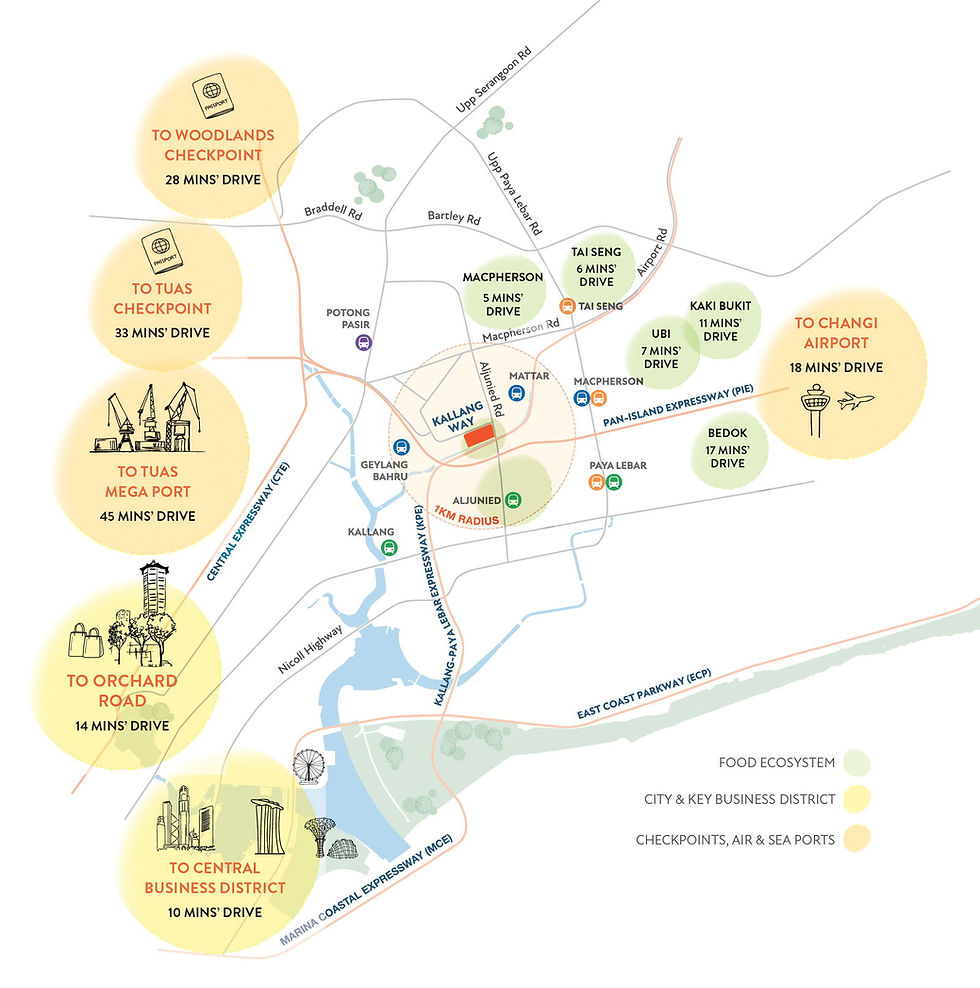
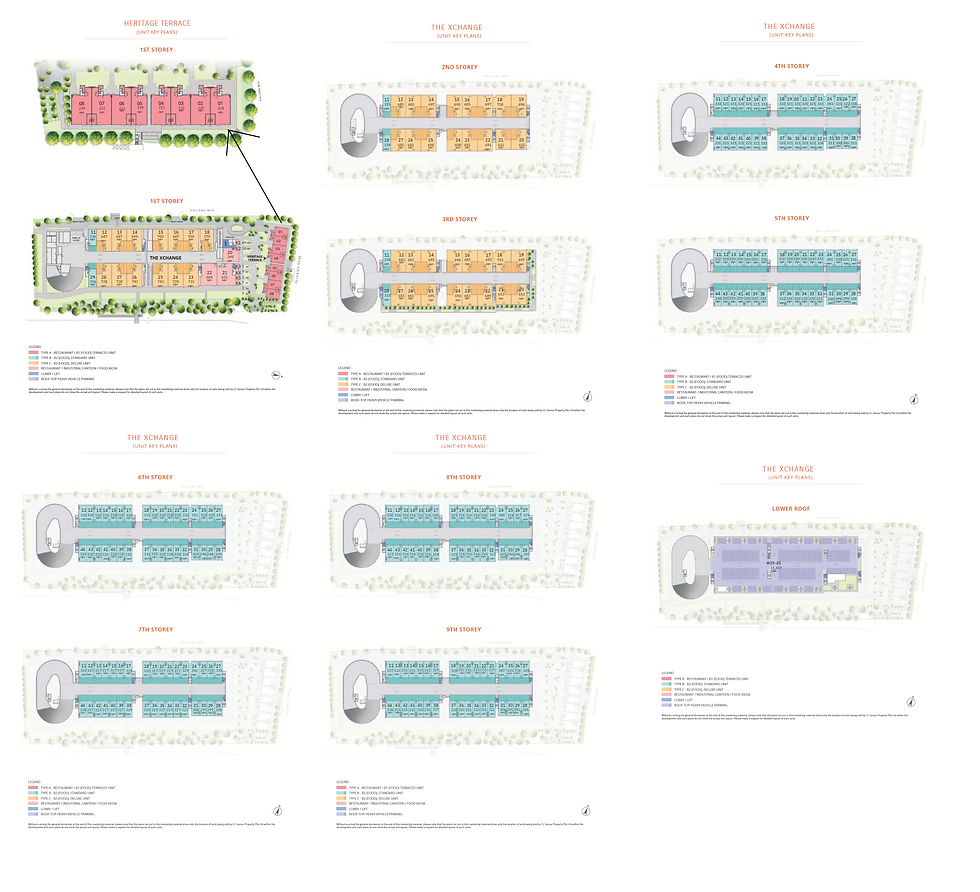
Gourmet Xchange is positioned as a strata-titled food hub at 1 Kallang Way, with The Xchange, Heritage Terrace, F&B spaces, food kiosks, an industrial canteen, central plaza and waterfront elements forming part of the project story. The key appeal is not one feature alone. It is the combination of central Singapore location, food-only positioning, production-oriented specifications, ramp-up logistics and the ability for suitable operators to build a more permanent food production base.
As always, buyers and tenants should rely on the latest official developer materials, approved plans, sale documents and authority requirements before making any commitment. Blog articles are useful for framing the decision, but final due diligence must be based on the definitive documents and professional advice.
Related reading
Source credit
Project facts based on Gourmet Xchange developer materials and official brochure. Customer-facing uses are subject to approvals.
Speak to the appointed agent
If you are assessing whether Gourmet Xchange fits your operational or investment requirements, speak to Marc Singh for the latest available units, floor plans, specifications and viewing arrangements.


Comments